Small tools for slow, careful work.
One helps you write papers. The other keeps time while you practise music. Both are free and keep your files on your own machine.
About me: pulsars and gravitational waves-
01
GitLaTeX
A LaTeX editor that runs locally and uses Git
-
02
Taal Studio
A practice companion for Hindustani music
GitLaTeX
A LaTeX editor that runs locally in your browser and works with Git.
Write in a Monaco editor, compile to PDF and push to GitHub. You don’t need Overleaf or a subscription, and your files stay on your machine.
downloadson PyPI


$ pip install gitlatex
$ gitlatex
  → opening http://localhost:5000
Comments and live editing
Comment threads like Overleaf’s, stored in your repo and shared through Git, so reviews travel with the paper. Turn on live editing and co-authors write with you in real time, with shared cursors.
A real code editor
Monaco from VS Code, with LaTeX and BibTeX highlighting, label and citation autocomplete, an outline, spell checking and snippets.
Compiles anywhere
Use your own TeX, TeX Live running in the browser, or a remote compiler. Builds run all passes and list problems you can click.
PDF and source sync
Click a line to find it in the PDF. Double-click the PDF to jump back to the source.
Git built in
Stage, commit, pull, push, switch branches and resolve merge conflicts. Includes history and side-by-side diffs.
Vim mode
VimTeX-style keys if you prefer them. Changes save automatically as you type.
Requirements
| Python | 3.8 or newer |
| Git | For cloning, pushing and version history |
| LaTeX | Optional: TeX Live, MiKTeX or MacTeX. Without one, documents compile in the browser (a one-time download of about 190 MB) |
Command-line options
| --port, -p | Port to serve on (default 5000) |
| --host | Bind address (default 127.0.0.1) |
| --no-browser | Don't open a browser on start |
| --repos | Where projects live (default ./repos) |
| --fetch-engine | Download the in-browser TeX engine now, then exit |
Built by Md Abdus Sami Akanda and Md Atiqur Rahman, with contributions from Md Shamim Towhid.
Taal Studio
A practice companion for Hindustani music.
Tabla and pakhawaj thekas, lehra, tanpura, swarmandal and manjeera, all in sync and tuned to your Sa.
Search and play Tagore song notations, in time with the taal.
# teentaal: 16 beats, | separates vibhags
Dha Dhin Dhin Dha | Dha Dhin Dhin Dha |
Dha Tin  Tin  Ta  | Ta  Dhin Dhin Dha
13 taals and a kayda
Tabla or pakhawaj, any start beat, a dayan/bayan mix, fine tuning for the tabla, and manjeera on taali and khali.
Tanpura and swarmandal
Ten tanpura tunings, three tones, one or two tanpuras with random plucking. The swarmandal strums in 14 ragas, on sam or by hand.
Synced lehra
Harmonium or santoor, loaded for each taal. Change Sa or tune in cents and every instrument retunes together.
Sargam practice
Alankars in any raga, or your own lines, from barabar to chaugun. Call and response, with an optional mic check that marks each note as in tune, low or high.
Composer and sequences
Write bols like DhaGe TiRaKiTa and check them as you type. Chain taals and compositions with repeats and a tempo for each step.
Tuner, tap tempo and presets
A mic tuner that can set Sa from your voice, tap tempo, presets and favourites. Export everything as JSON.
Sargam notation
| S R G M P | Shuddha swars. Lowercase r g d n are komal, M is tivra |
| .N S' | Mandra and taar saptak |
| (GM) | Notes that share one step |
| S[0.5] | A note length in beats |
Runs everywhere
| Browser | A static site with no server. Saves stay in your browser |
| Android | Works fully offline. Samples and your saved JSON are bundled in the app |
| Share | Compositions, presets and sargam lines are plain JSON files |
About me
I’m Md Atiqur Rahman, a PhD candidate at the University of Cape Town. I use pulsars to listen for gravitational waves.
Millisecond pulsars are the steadiest clocks in nature. They spin hundreds of times a second, and we can predict when each pulse will reach Earth to within a fraction of a microsecond, over decades. A pulsar timing array (PTA) watches dozens of them across the sky at once and uses the whole set as a detector the size of the Galaxy.
A gravitational wave passing between us and the pulsars stretches and squeezes the space in between, so the pulses arrive slightly early or late. The waves PTAs are sensitive to have periods of years and wavelengths of light-years. These are nanohertz frequencies, far below anything LIGO can hear. The strongest expected source is the combined hum of supermassive black-hole binaries spiralling together at the centres of merging galaxies.
The signature is the Hellings–Downs curve: how strongly two pulsars’ timing residuals are correlated depends only on the angle between them on the sky. Since 2023, NANOGrav, EPTA with InPTA, PPTA and CPTA, and more recently the MeerKAT PTA, have reported evidence for that pattern. It is the first sign of a nanohertz gravitational-wave background, and the work now is to confirm it and find out what is making it.
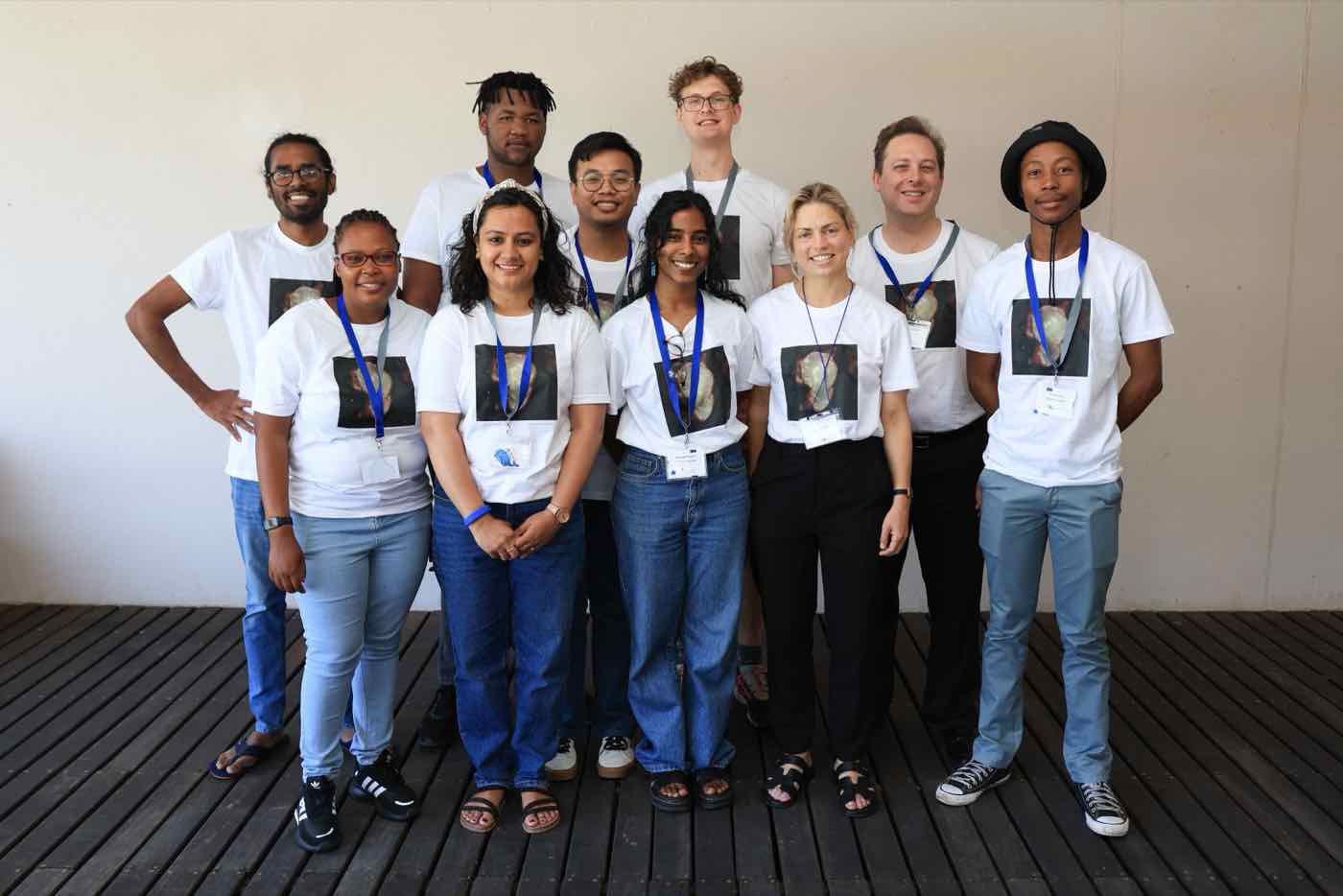
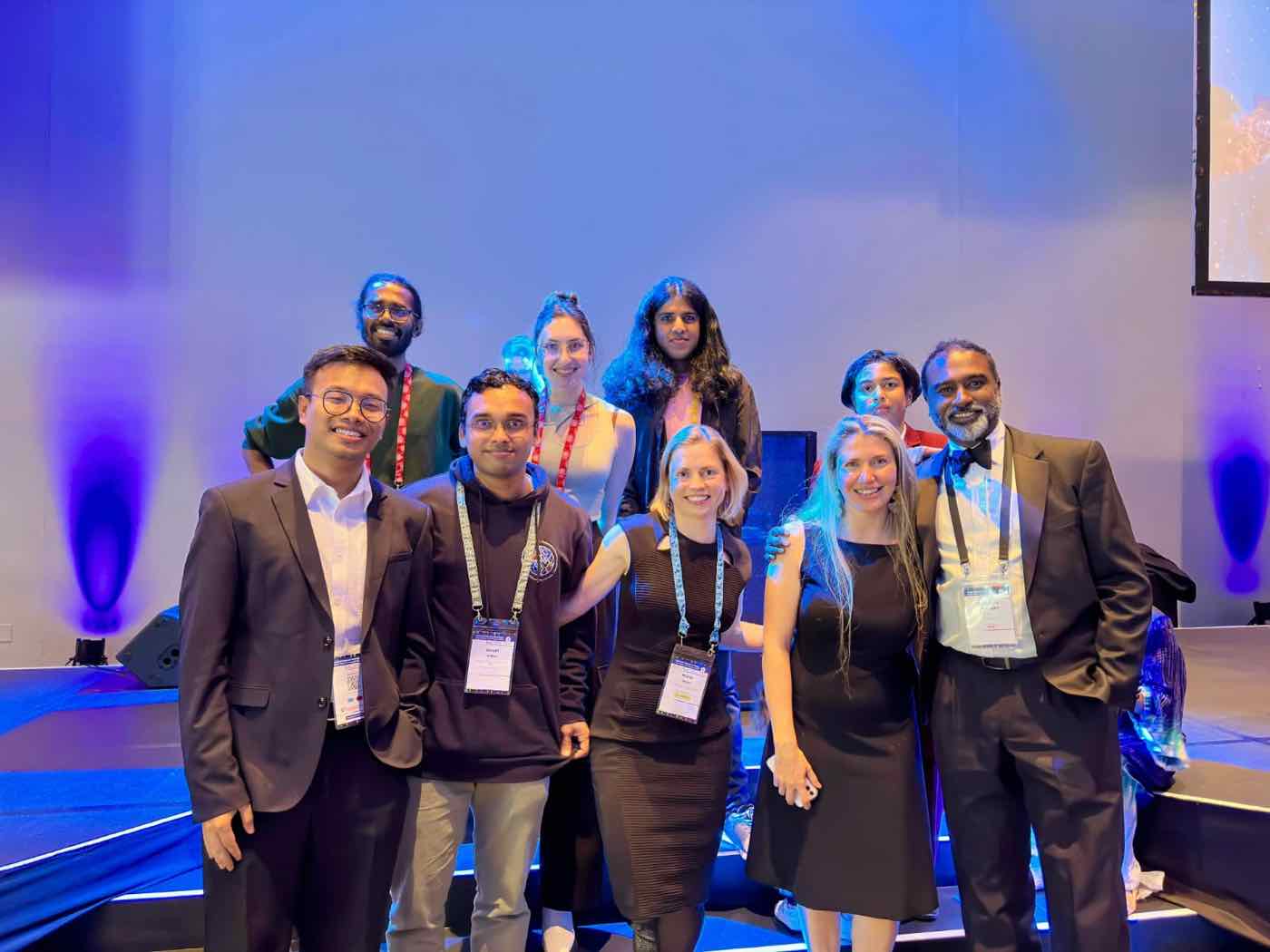
At UCT I’m part of the HEPCAT group (High Energy Physics, Cosmology & Astrophysics Theory), and I’m a member of African Pulsar Timing.
Γ(θ) = ½ − x/4 + (3/2)·x·ln x
  x = (1 − cos θ)/2,  θ = angle between two pulsars
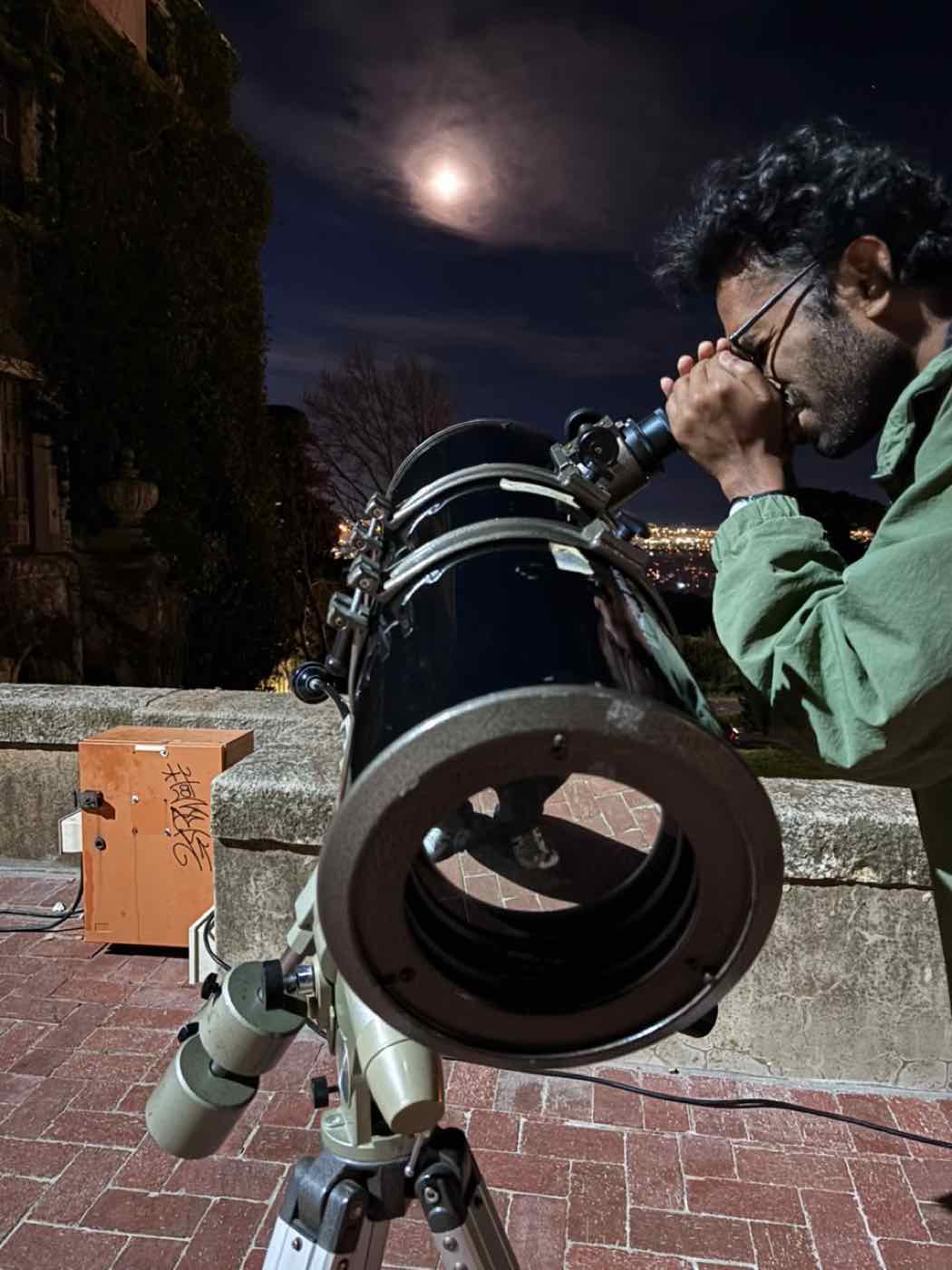
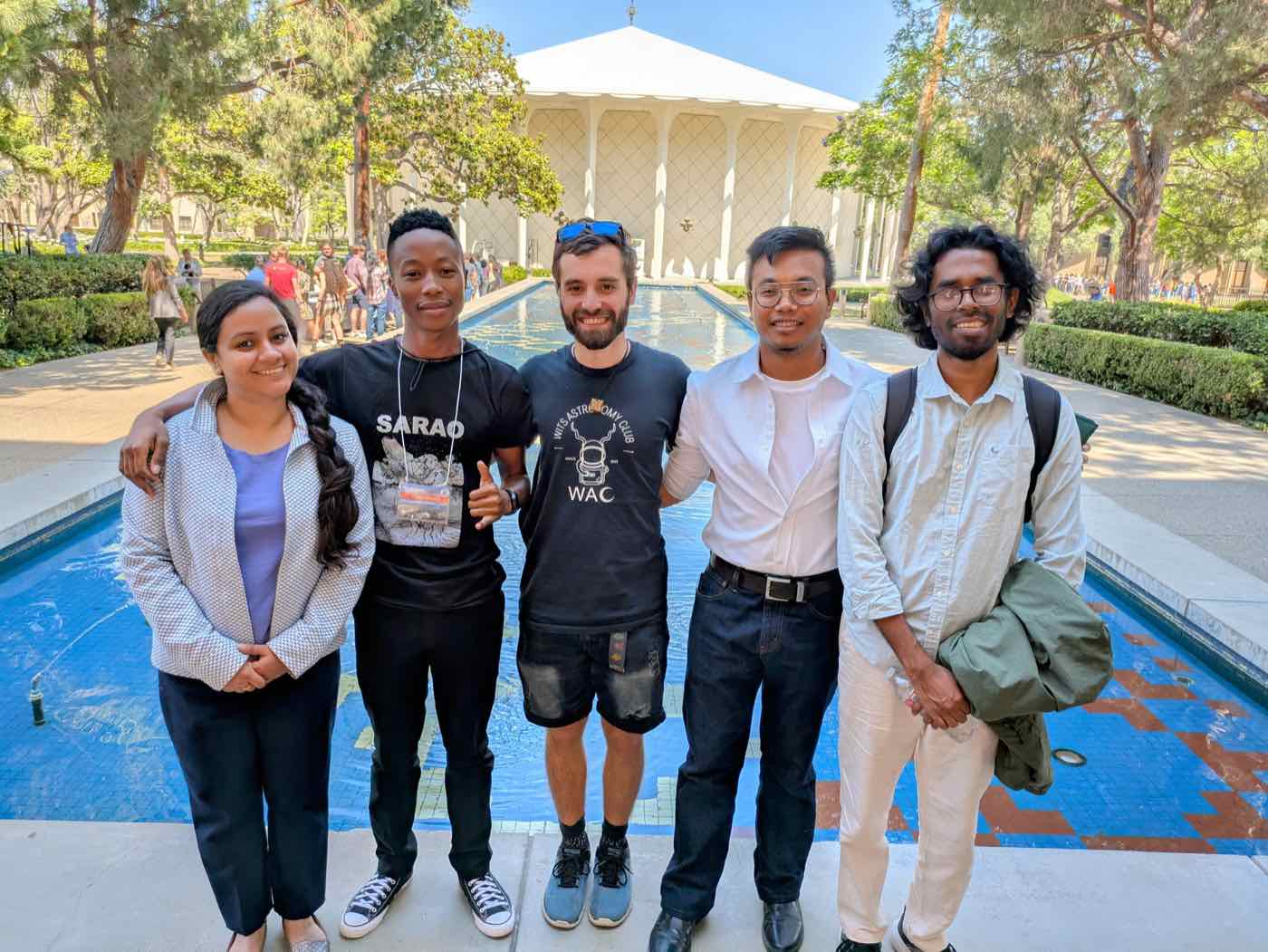
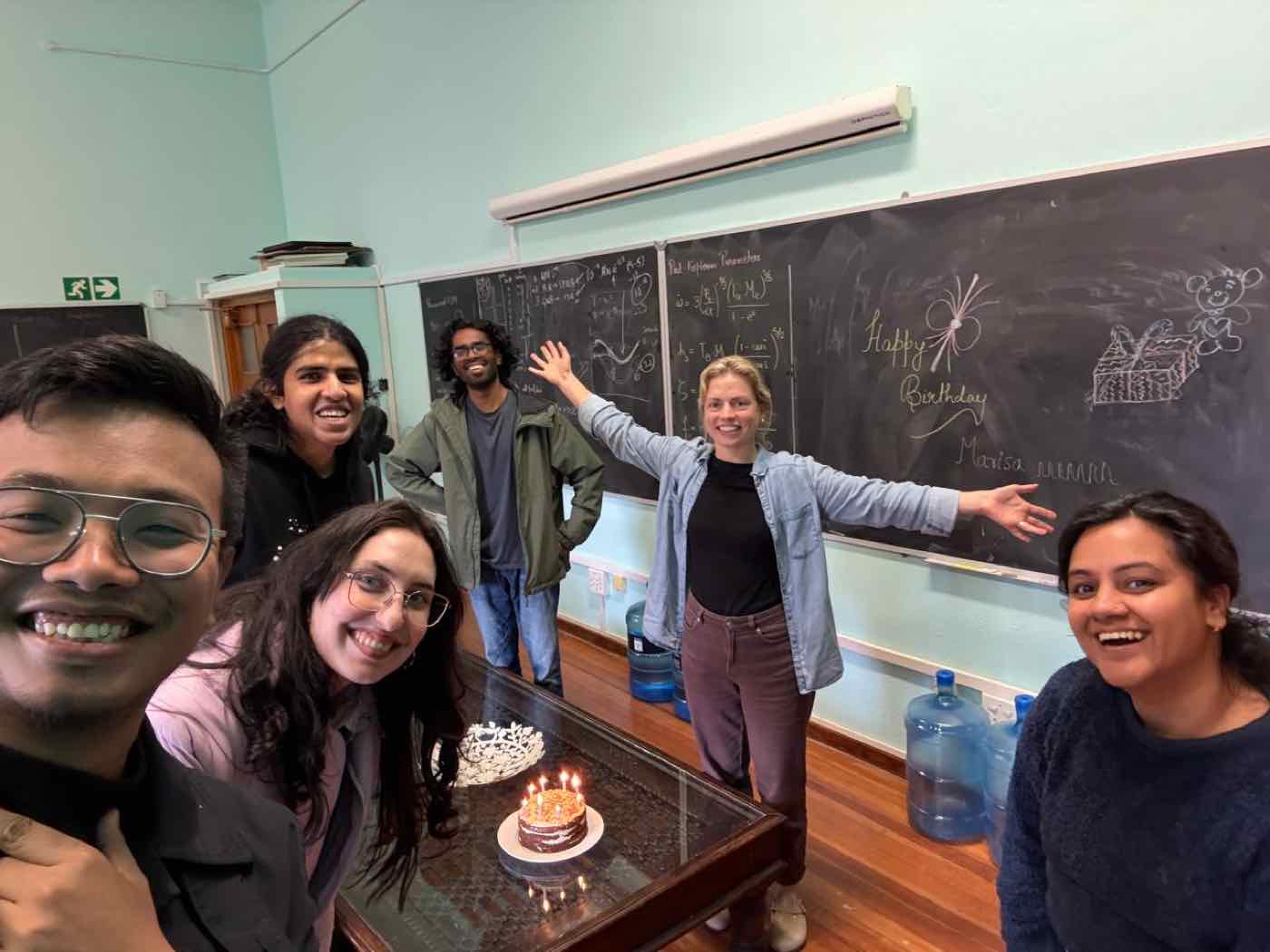
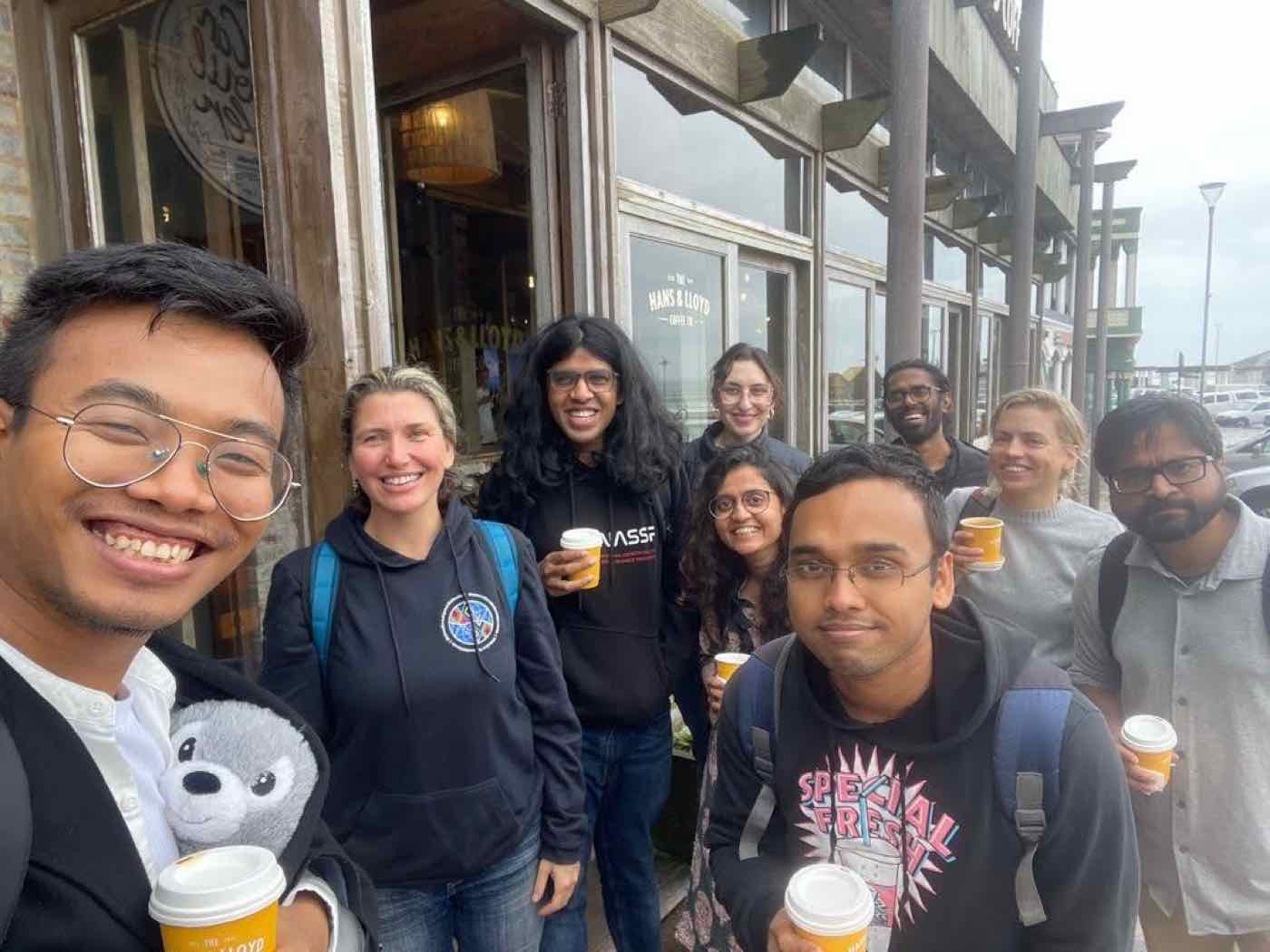
Credit @HEPCAT, @APT and Friends